Blog

AI vs Privacy: The Hidden Cost of Convenience in the Age of Intelligent Machines

We live in a time where Artificial Intelligence (AI) is no longer a concept from science fiction — it’s our daily reality. From ChatGPT and Microsoft Copilot to hundreds of AI-powered apps that write, summarize, or even analyze for us, AI has become as common as Wi-Fi. But as we hand more of our data, ideas, and personal details over to machines, one question demands attention: How private are our interactions with AI, really?

How AI Could Erase the Next Generation of Engineers — and How We Can Save It

Artificial Intelligence (AI) has become the shiny hammer in every tech toolbox — a promise of speed, efficiency, and scalability. But as the saying goes, when all you have is a hammer, everything looks like a nail. In the rush to automate every aspect of development, we may be quietly dismantling the very foundation that made our industry thrive: human problem-solving.

What is Prompt Engineering? Learn the Most Valuable Skill of the AI Era

Artificial intelligence is now a part of our daily lives. What we once saw only in science fiction movies is now sitting on our desks, in our pockets, and even helping us at home. But amid this technological revolution, one quiet but powerful skill has emerged: Prompt Engineering. So, what exactly is this “prompt” everyone is talking about? Why is it becoming one of the most sought-after skills in the world? Let’s dive deep and find out.

From Project Chaos to Control: How PMP Makes the Difference

Let’s find out through 5 real-world scenarios where PMP proves why it’s not just another framework, but the backbone of professional project management worldwide.

Where to Start Learning Programming

Should it be Python because it’s easy? Java because it’s everywhere? Or C# because it’s practical and professional? This guide gives you the most up-to-date 2025 roadmap for learning to code, featuring the three most influential languages in today’s tech world — and direct access to Bilginc’s professional training programs for each.

10 Things You Should Know Before Starting CEH Training

Let’s be honest — cybersecurity isn’t just an IT department concern anymore; it’s a survival skill in 2026. AI-driven attacks, data leaks, ransomware, phishing on steroids — the threats keep evolving.

Certified Ethical Hacker (CEH) Exam Guide: Sample Questions, Tools for Success

If the phrase ethical hacker makes you imagine a hoodie-wearing genius in a dark room… you’re not entirely wrong. But Certified Ethical Hacker (CEH) is far from a stereotype — it’s a globally recognized cybersecurity certification by EC-Council that trains professionals to think like hackers, yet act ethically.

How to Use Microsoft Copilot Effectively?

Think of Copilot as a digital employee embedded inside Microsoft 365. It works across Word, Excel, Outlook, PowerPoint, Teams, and OneNote — and even automates tasks in Power Automate or Viva.

CISO vs CEH: What’s the Difference and Which One Should You Choose?

One teaches you how to hack like a pro. The other teaches you how to lead like a CEO. So, what’s the real difference between Certified Ethical Hacker (CEH) and Certified Chief Information Security Officer (CISO) certifications?

EC-Council Certified CISO (CCISO): The CEO of Cybersecurity Explained

Well, brace yourself — because a CISO (Chief Information Security Officer) isn’t just a title. It’s the architect of digital trust inside an organization — the person who guards not only servers and firewalls, but the company’s reputation, compliance, and future.

What Are ISO Certifications and Why Do They Matter?

Its mission? “To make sure the whole world speaks the same language of quality.” In short, ISO writes the “rulebook” for doing things right — and if your company follows it, you’re officially playing in the global league.

Microsoft Copilot in Business: Your Invisible Digital Colleague

In today’s business world, speed, productivity, and innovation are not optional anymore—they are survival tools. Emails keep piling up, Excel spreadsheets look scarier by the minute, and meeting notes grow into mountains. This is where Microsoft Copilot steps in. Think of it as the “invisible hero of your office.” While you’re sipping your coffee, it’s drafting reports, creating proposals, or shaping presentations for you.

Kubernetes with AWS, Azure, Red Hat & VMware

Imagine you’re at an orchestra rehearsal. The drums play their own rhythm, violins wander off into another melody, and the flutist is in a completely different world. Chaos! That’s exactly what it feels like to manage containerized applications without Kubernetes.

What is Kubernetes? Its Rivals, Differences, and a Fun Journey

Kubernetes (K8s) is the superhero traffic cop who jumps in to save the day: “Okay, you go here, you go there, wait—this pod just crashed, let’s spin up a new one!” And suddenly, everything is organized, automated, and running smoothly.

What is Red Hat JBoss?

Red Hat JBoss is a Java-based open-source application server. Think of it as the conductor of an orchestra. The musicians (developers) write the notes (code), and JBoss ensures everything works in harmony. Without the conductor? Chaos. That’s exactly how enterprise applications operate smoothly, securely, and efficiently thanks to JBoss.

Microsoft Copilot: The Superhero of Modern Work

Office life can feel like running on a treadmill: juggling Excel spreadsheets, drafting Word reports, answering endless Outlook emails, and preparing PowerPoint slides late at night. The day slips away before you even notice. Enter Microsoft Copilot – the AI-powered sidekick that’s here to change the game. Think of it as Jarvis to Iron Man or Alfred to Batman: always by your side, always reliable.

Why Is SAP Used and Who Uses It?

SAP integrates finance, logistics, human resources, production, and sales into a single centralized system. This not only boosts efficiency but also accelerates decision-making processes.

What is Red Hat OpenStack?

In the digital transformation era, one of the biggest questions enterprises face is: “Should we build our own private cloud, or rely solely on public cloud providers?” While public cloud services like AWS, Azure, and Google Cloud are attractive, many organizations choose private cloud due to data security, regulatory compliance, and cost control.

What is Red Hat OpenShift?

In the era of digital transformation, businesses have one ultimate goal: faster development, more secure infrastructure, and uninterrupted service delivery. And one of the biggest players stepping into this space is Red Hat OpenShift. But OpenShift is not just a software platform; it is also an ecosystem that reshapes how enterprises build and manage applications.

What is SAP WM (Warehouse Management)? The Digital Maestro of Warehouses

Warehouse management might sound simple: receive products, put them on the shelf, take them out when needed… But in large-scale companies with thousands of products, dozens of warehouses, and multiple locations, things can get complicated very quickly.

What is SAP QM (Quality Management)? The Digital Guardian of Quality

In the world of manufacturing, quality is the cornerstone of customer satisfaction. But quality is not just about checking the product at the end — it’s about meticulously monitoring every step, from the moment raw materials enter the warehouse to the point the finished product reaches the customer. This is exactly where SAP QM (Quality Management) comes into play.

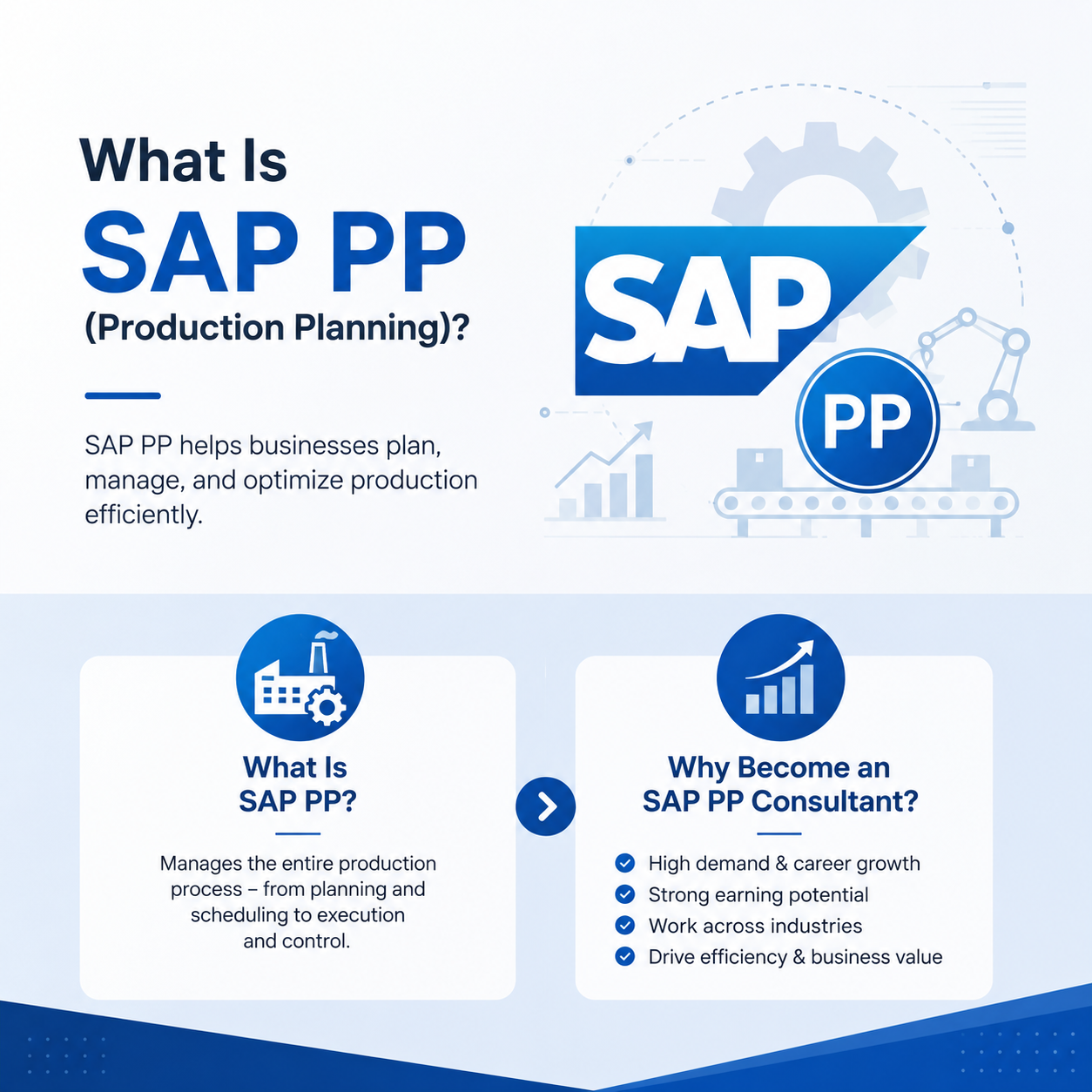
What is SAP PP (Production Planning)? The Digital Brain and GPS of Your Factory

Production is the heart of a factory. But for this heart to beat without disruption, you need the right materials, machines, and workforce at the right time. That’s exactly what SAP PP (Production Planning) does — it’s the digital brain and GPS system that keeps your production rhythm in perfect harmony. In short, SAP PP is a module that plans, optimizes, and controls manufacturing processes — all while improving both speed and cost efficiency.

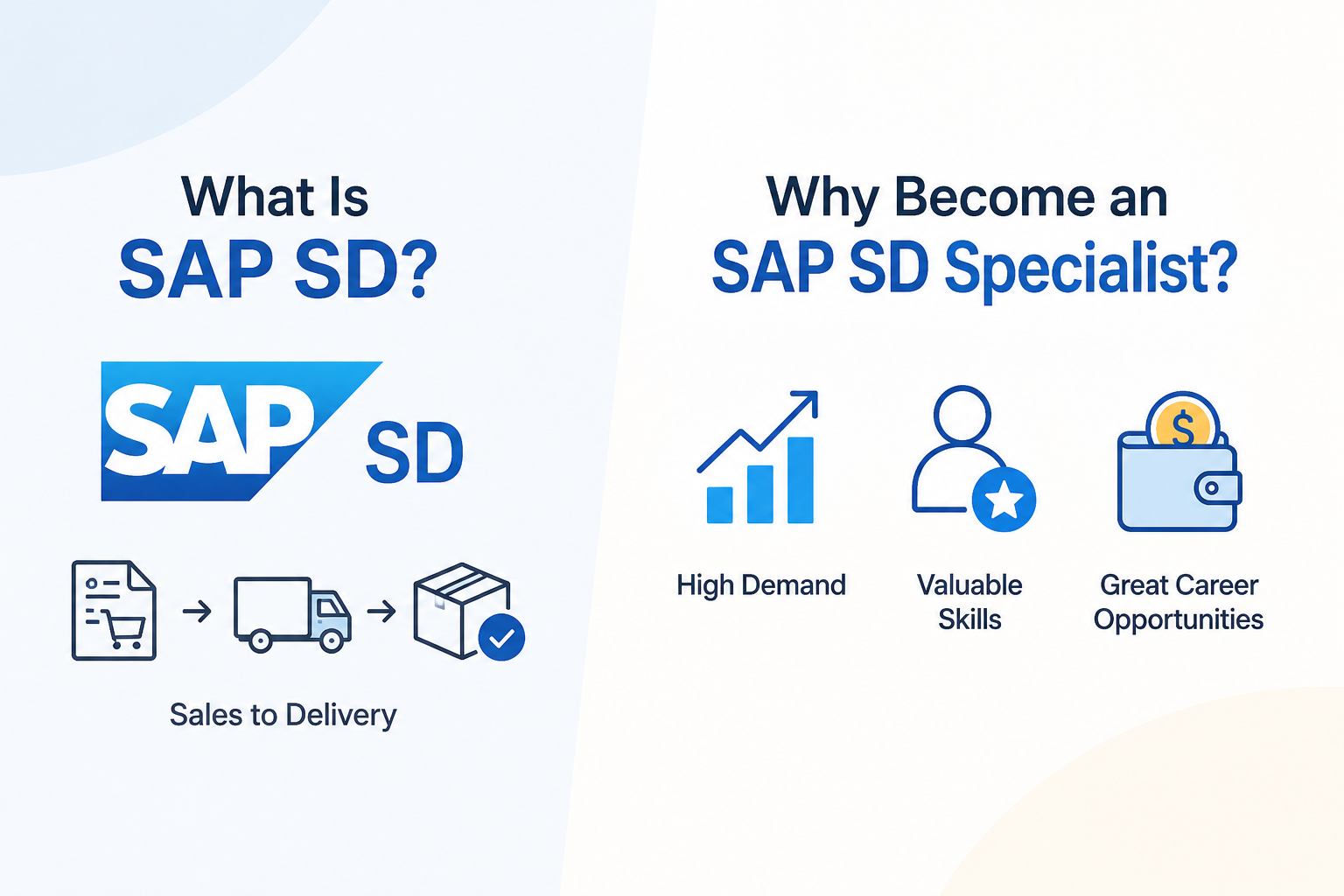
What is SAP SD (Sales and Distribution)? The Digital Superpower of Sales

Sales and distribution are the revenue gateway of any company. But sales are not just about “handing a product to the customer”; it’s a complete process from quotation to delivery, from invoicing to customer relationship management. This is where SAP SD (Sales and Distribution) comes in — the digital sales wizard that manages the entire process end-to-end while consolidating all data into a single hub.

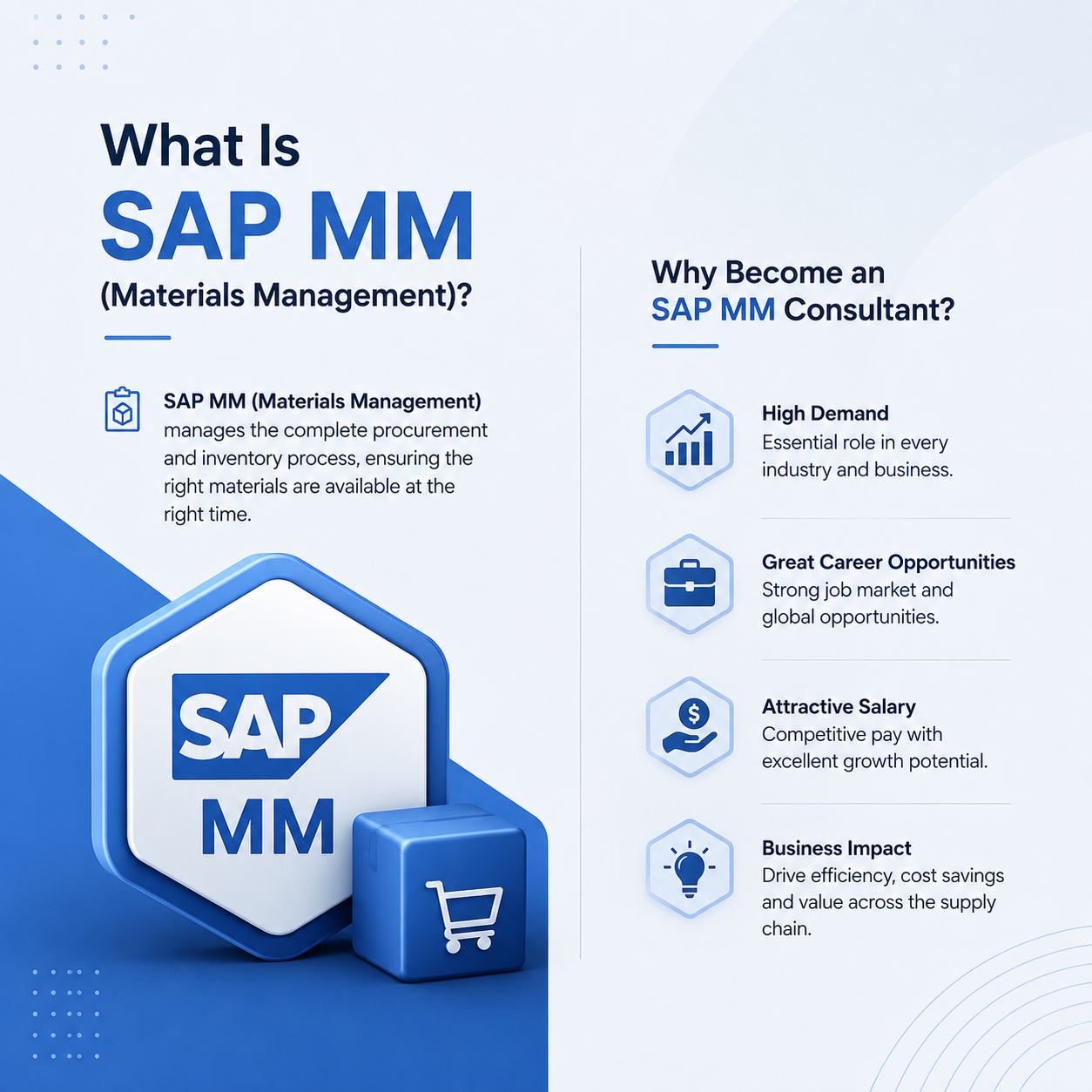
What is SAP MM (Materials Management)? The Digital Superhero of Supply Chains

Material management may sound like simply “keeping stock records.” But SAP MM takes it to a whole new level with automation + analytics + speed. It manages supplier negotiations while tracking inventory depletion and ensuring production never stops. Let’s meet this digital superhero.
By using this website you agree to let us use cookies. For further information about our use of cookies, check out our Cookie Policy.